Updated: July 18, 2025
Note: The Summer 2025 issue of PLENTY magazine features an article by SCA President Steven Findlay on the new state solar law, which went into effect July 1. The piece explores how the legislation evolved, what it does, and the debate surrounding it.
Click here to view/download the full article.
Below is an updated web post on this issue. Details on the new law—which are complex—can be found in the PLENTY piece and are not addressed in this post.
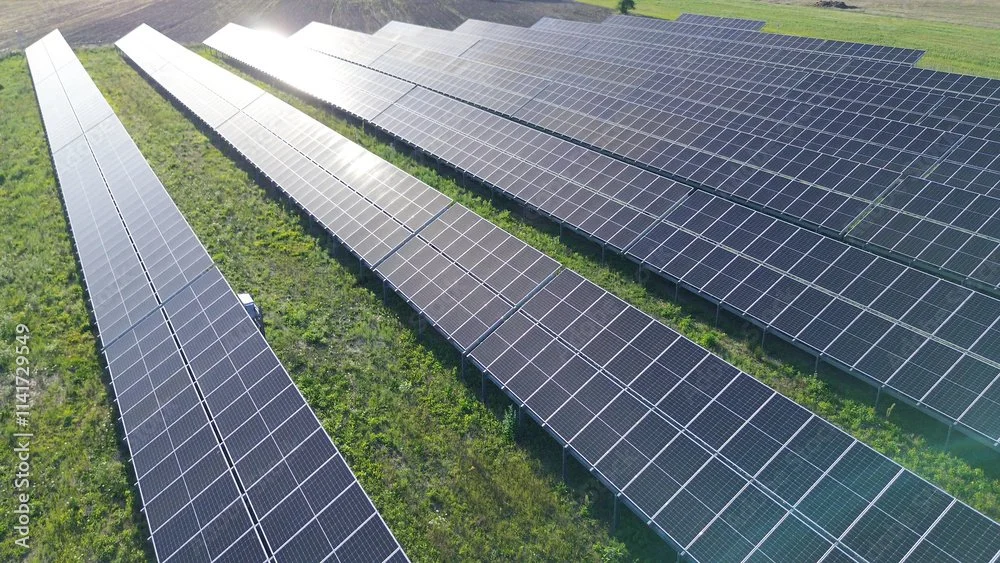
A new state law—The Renewable Energy Certainty Act—went into effect on July 1. It aims to significantly expand solar energy generation in Maryland. It does that by:
Streamlining regulations for the assessment of proposed ground-based solar facilities
Giving solar companies easier access to farmland—around 120,000 acres throughout the state, and
Preventing counties from denying permits for utility-scale solar projects.
We’ll now see how the law affects the solar industry—whether it prompts a flood or just a trickle of new proposals. We’ll see how the state’s Public Service Commission (PSC), which is charged with reviewing solar proposals, adapts its process to the new law. We’ll see how easily the state’s energy companies and regulators accommodate new solar proposals—that is, accept them for addition to the grid, and in what timeframe. And, finally, we’ll see just how many landowners/farmers in the Ag Reserve are interested in converting some of their land from agriculture to solar energy generation.
Before the law passed the legislature in April, no certainty existed around the scope of landowner interest, beyond the anecdotal and a few projects already in process.
Joined by Montgomery Countryside Alliance (MCA), the Montgomery Farm Bureau (MFB), and Montgomery Agricultural Producers (MAP), SCA will be closely tracking implementation of the law and solar proposals in the Ag Reserve and Montgomery County.
The state’s Department of Agriculture is due to release a fact sheet and Q&A on the law soon. We’ll share those with you when we get them.
Solar companies continue to contact landowners in and near the Ag Reserve, offering to evaluate their land for possible solar development. Neither state nor county officials appear to be tracking those offers. Landowners have reported solar offers that would net them 10 to 20 times more money than leasing to a farmer.
That issue and the concept of converting historically agricultural land to non-farm use triggered fierce opposition to the new law in some quarters. SCA shared that concern and fought to amend the bill.
Our main concern: the law appears to create a “slippery slope” that could undermine the ag economy and Ag Reserve over time. But just how steep that slippery slope might be depends on many factors—not the least of which is how the entities that regulate energy supply react.
The most important of those entities is PJM Interconnection. PJM is responsible for operating the wholesale energy market in 13 states and Washington, DC, including Maryland. For years, PJM has told state lawmakers and regulators that it was “backlogged” on solar projects—because such projects had proliferated. Will that backlog now change under the new law and amid rising energy demand? It’s not clear.
Several local solar projects in the regulatory pipeline may provide further insight on how things will go.
One (Chaberton Sugarloaf) is a 3-megawatt project on approximately 11 acres in Dickerson. Another (Chaberton Ramiere) is a 4-megawatt project on 16 acres near Poolesville. A third (Mountain Vale) is a 2-megawatt project on 11 acres at 17700 Barnesville Rd. And a fourth (Project Victoria) is a 4.3-megawatt project at 15220 River Rd in Darnestown (as sister to a 2.5-megawatt solar installation nearby at 13330 Signal Tree Lane, which is already approved and under construction.)
Three of those projects (Dickerson, Poolesville, and Darnestown) are proposed by Chaberton Solar, a company based in Rockville. If approved by the PSC, Chaberton Sugarloaf and Ramiere would be built on land that have been farmed for years and mostly comprised of high-quality class 2 soils.
SCA is an “intervenor” in the PSC process on Chaberton Sugarloaf and Ramiere, together with MCA, MAP and MFB.
See here for information on an upcoming hearing on the Montvale project. And see here for information (from community opponents) on the Victoria project.
We welcome your comments and questions on this issue. They will help inform our advocacy. We’ll be updating this post as things evolve.
Read More

